Base Metals Mining in Namibia
Namibia’s base metals industry has played a significant role in the country’s mining sector for more than a century. Producing zinc, lead, copper, and tin, the industry has evolved from small-scale, early 20th-century operations into a modern, diversified mining portfolio supported by world-class infrastructure, regulatory stability, and growing investment in mine expansion and downstream processing.
Zinc and Lead
Historical Overview
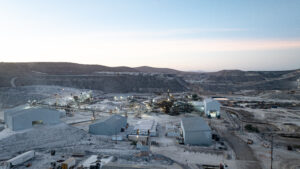
Zinc mining in Namibia dates back to the early 1900s, with the discovery of the Rosh Pinah deposit in southern Namibia in 1963 marking a major milestone. Commercial production began in 1969, establishing Rosh Pinah as one of the country’s longest-running base metal mines. The Skorpion Zinc deposit, discovered in the late 1970s, introduced a new chapter in Namibia’s zinc industry when production commenced in 2003. Unlike traditional sulphide zinc operations, Skorpion became globally recognised for its hydrometallurgical processing of oxide zinc ore, producing Special High-Grade (SHG) zinc.
Current Operations and Projects
- Rosh Pinah Zinc Mine: Now majority-owned by Appian Capital Advisory, Rosh Pinah is undergoing the transformative RP2.0 expansion project, which is set to nearly double annual zinc and lead output while extending the mine life well into the 2030s. The expansion includes new mining areas, upgraded processing facilities, and improved efficiencies.
- Skorpion Zinc Mine: Operations at Skorpion Zinc have been suspended following depletion of the oxide orebody and slope stability challenges. Vedanta Zinc International is currently evaluating options to refurbish the refinery and potentially convert it into a toll smelter, leveraging the site’s established infrastructure and skilled workforce.
Copper
Historical Overview
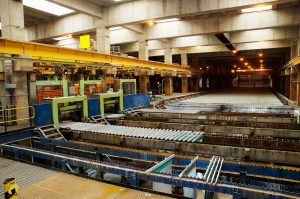
Copper mining in Namibia has a long and varied history, beginning with small-scale operations in the early 1900s, particularly in the Otavi Mountain Land. The development of the Tsumeb smelter in the 1960s positioned Namibia as a regional processing hub for copper concentrates produced locally. In the early 2000s, several copper mines were in production; however, many were subsequently shut down or placed on care and maintenance following the global financial crisis. Thereafter, the Matchless and Otjihase mines remained in production until they were also placed on care and maintenance in 2015. This period was followed by the opening of the Tschudi copper mine, marking a renewed phase of copper mining activity in Namibia.
Current Operations and Projects
- Tschudi Copper Mine: The Tschudi Copper Mine was placed on care and maintenance following the depletion of its oxide ore body. Consolidated Copper has since successfully restarted operations, completing processing upgrades that allow for the production of LME-grade copper cathode from the remaining sulphide ore body.
- Tsumeb Smelter: Formerly operated by Dundee Precious Metals, the Tsumeb smelter has long been a strategic asset, producing blister copper from imported concentrates. The smelter was acquired by Sinomine in August 2024 and has since been placed on care and maintenance. Sinomine plans to convert the facility into a processing plant for recycled metals.
Tin
Historical Overview
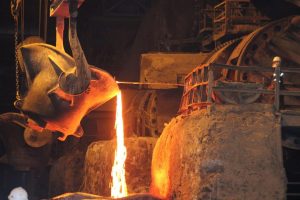
Tin mining in Namibia dates back more than a century, with the Uis Tin Mine once ranking among the world’s largest hard-rock tin operations during the mid-20th century. Production declined in the late 1980s due to low tin prices, leading to mine closure. Renewed global demand for tin, driven by electronics, solder, and renewable energy technologies, has revitalised interest in Namibia’s tin resources.
Current Operations and Projects
Andrada Mining has successfully revived and expanded tin production at Uis. In 2025, the mine achieved record tin output and continues to grow under a phased expansion strategy. In addition to tin, the operation produces tantalum as a valuable by-product, enhancing project economics and supporting Namibia’s role in supplying critical minerals. Andrada Mining is also actively engaged in lithium exploration at Uis and is currently testing processing techniques to assess the potential for future lithium production.